<?xml version='1.0' encoding='UTF-8'?>

<!DOCTYPE article PUBLIC "-//NLM//DTD JATS (Z39.96) Journal Publishing DTD v1.1d1 20130915//EN" "JATS-journalpublishing1.dtd">
<article xmlns:xlink="http://www.w3.org/1999/xlink">
  <front>
    <journal-meta id="journal-meta-87cddb9ab7774ac9973b6a64b7cbc767">
      <journal-id journal-id-type="nlm-ta">Sciresol</journal-id>
      <journal-id journal-id-type="publisher-id">Sciresol</journal-id>
      <journal-id journal-id-type="journal_submission_guidelines">https://jmsh.ac.in/</journal-id>
      <journal-title-group>
        <journal-title>Journal of Medical Sciences and Health</journal-title>
      </journal-title-group>
      <issn publication-format="print"/>
    </journal-meta>
    <article-meta>
        
          
            <article-id pub-id-type="doi">10.54839/ijprcp.v5i3.26.5</article-id>
          
          
            <article-categories>
              <subj-group>
                <subject>ORIGINAL ARTICLE</subject>
              </subj-group>
            </article-categories>
            <title-group>
              <article-title>&lt;p&gt;Effectiveness of Core Muscle Strengthening Exercises vs Lumbar Stabilization Exercises in Lumbar Range of Motion, Pain and Functional Disability on Mechanical Low Back Pain among College Students&lt;/p&gt;</article-title>
            </title-group>
          
          
            <pub-date date-type="pub">
              <day>30</day>
              <month>3</month>
              <year>2026</year>
            </pub-date>
            <permissions>
              <copyright-year>2026</copyright-year>
            </permissions>
          
          
            <volume>5</volume>
          
          
            <issue>3</issue>
          
          <fpage>1</fpage>

          <abstract>
            <title>Abstract</title>
            &lt;p&gt;Mechanical low back pain is one of the most common musculoskeletal conditions affecting young adults, especially college students. Reduced lumbar flexibility and poor spinal stability are contributing factors. Core muscle strengthening and lumbar stabilization exercises are two effective approaches used in physiotherapy rehabilitation to improve spinal mobility and function. This study focuses on enhancing lumbar flexion and extension range of motion using specific exercise interventions and measuring outcomes using the Modified-Modified Schober Test (MMST). A total of 40 college students with mechanical low back pain aged between 18 to 25 years were selected using simple random sampling and divided into two equal groups: Group A received core muscle strengthening exercises. Group B received lumbar stabilization exercises. The intervention period lasted for 4 weeks. Pre-test and post-test lumbar flexion and extension were assessed using the MMST. Data were collected and analyzed using paired and unpaired t-tests to determine statistical significance. Both groups showed significant improvement in lumbar range of motion. However, Group B (lumbar stabilization) showed greater improvement in both flexion and extension than Group A. This indicates the superior effectiveness of stabilization exercises in improving spinal function.&lt;bold&gt; &lt;/bold&gt;The study concludes that lumbar stabilization exercises are more effective than core strengthening in improving lumbar ROM among college students with mechanical low back pain. Incorporating stabilization protocols in rehabilitation may enhance spinal stability and reduce recurrent back pain.&lt;/p&gt;
          </abstract>
          
          
            <kwd-group>
              <title>Keywords</title>
              
                <kwd>Mechanical Low Back Pain</kwd>
              
                <kwd>Lumbar Stabilization</kwd>
              
                <kwd>Core Strengthening</kwd>
              
                <kwd>Modified-Modified Schober Test</kwd>
              
                <kwd>College Students</kwd>
              
            </kwd-group>


        <contrib-group>
          
            
              <contrib contrib-type="author">
                <name>
                  <surname></surname>
                  <given-names>Balamurugan K</given-names>
                </name>
                
                  <xref rid="aff-1" ref-type="aff">1</xref>
                
              </contrib>


              <aff id="aff-1">
                <institution> School of Physiotherapy, Aarupadai Veedu Medical College and Hospital Vinayaka Mission’s Research Foundation (Deemed to be University) </institution>
                <addr-line>Puducherry India</addr-line>
              </aff>


              <contrib contrib-type="author">
                <name>
                  <surname>Vijayan T</surname>
                  <given-names>Adithya</given-names>
                </name>
                
                  <xref rid="aff-1" ref-type="aff">1</xref>
                
              </contrib>


              <aff id="aff-1">
                <institution> School of Physiotherapy, Aarupadai Veedu Medical College and Hospital Vinayaka Mission’s Research Foundation (Deemed to be University) </institution>
                <addr-line>Puducherry India</addr-line>
              </aff>
            
          
        </contrib-group>
        
    </article-meta>
  </front>
  <body>
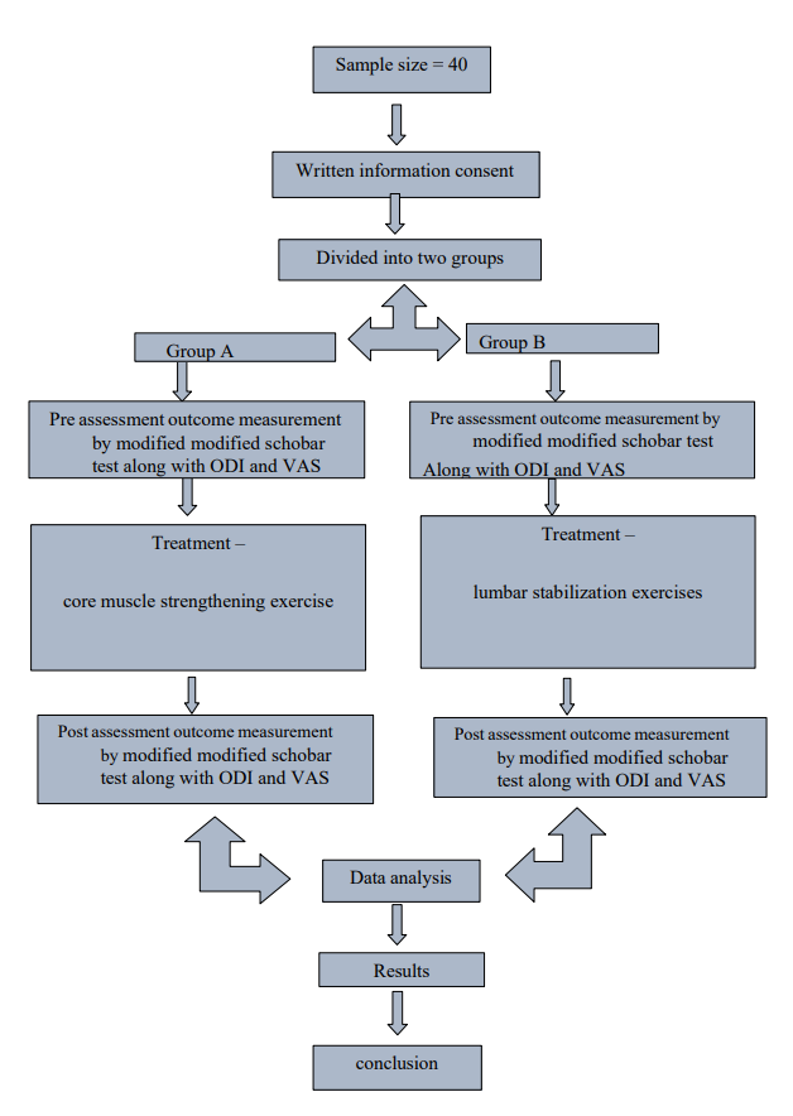
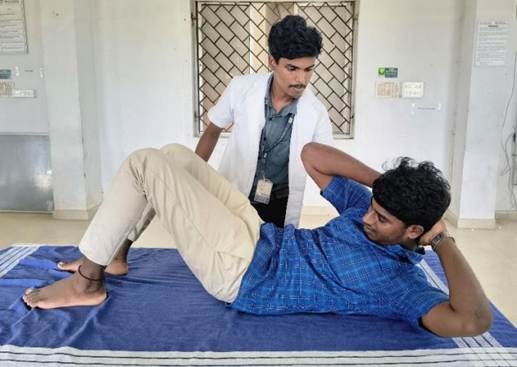
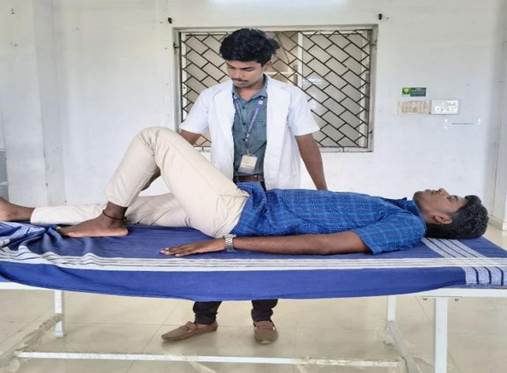
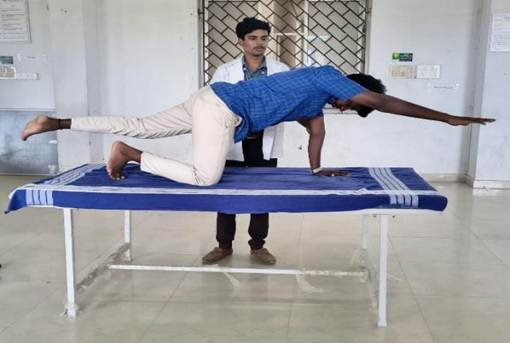
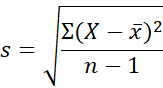
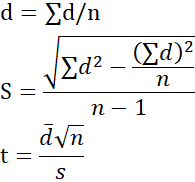
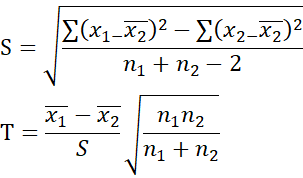
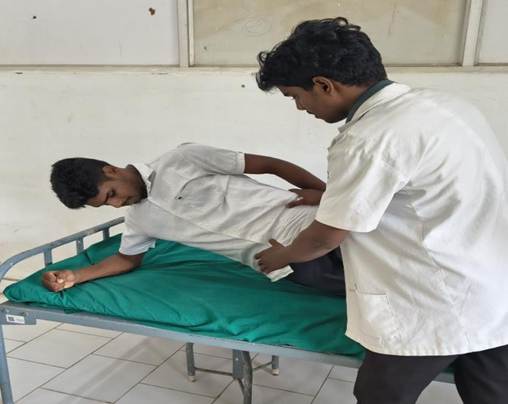
    <div><heading><span><bold>1 INTRODUCTION </bold></span></heading><p><span>Back pain that originates naturally from the spine, intervertebral disks, or surrounding soft tissues is referred to as mechanical low back pain. This encompasses spinal compression fractures, lumbar spondylosis, spondylolisthesis, spondylolysis, disc herniation, lumbosacral muscular tension, and acute or chronic traumatic injury<superscript>[<xref ref-type="link" rid="#ref-1">1</xref>]</superscript>. </span></p><p><span>Overuse and repetitive trauma are frequent causes of chronic mechanical low back pain, which frequently develops as a result of workplace injuries. The majority of people who suffer from low back pain that limits their activities eventually experience recurring bouts. Up to 23% of people worldwide suffer from chronic low back pain, and between 24% and 80% of patients experience a recurrence within a year<superscript>[<xref ref-type="link" rid="#ref-2">2</xref>]</superscript>. </span></p><p><span>Mechanical low back pain has a significant financial impact; its direct and indirect expenses are estimated to be in the billions of dollars per year. Furthermore, low back pain has a significant impact on quality of life, protectivity, and mental health and is the world's largest cause of disability<superscript>[<xref ref-type="link" rid="#ref-3">3</xref>]</superscript> </span></p><p><span>The rigorous nature of the program puts medical students in particular at risk for low back discomfort<superscript>[<xref ref-type="link" rid="#ref-4">4</xref>]</superscript>. Medical students who suffer from low back discomfort may find it difficult to focus, sleep well, and exercise, all of which can affect their academic performance and raise their stress levels. Additionally, medical students' academic and professional objectives may be further jeopardized if they skip classes, rotations, or tests due to low back pain<superscript>[<xref ref-type="link" rid="#ref-2">2</xref>-<xref ref-type="link" rid="#ref-5">5</xref>]</superscript>. Long periods of sitting or standing, repeated actions, and unnatural body positions might emerge from medical students' extensive study sessions, lectures, and clinical rotations. Depending on the study population and diagnostic standards, prior research has shown 75%<superscript>[<xref ref-type="link" rid="#ref-5">5</xref>]</superscript>. One active activity utilized in physical therapy is lumbar stabilization. It is intended to help prevent lower back discomfort by strengthening the muscles that support the spine. The patient is educated to discover and maintain her/his "neutral spine" position through a series of exercises, initially assisted by a skilled physical therapist. The spine is then taught to maintain this position by exercising the back muscles. Proprioception, or the knowledge of one's own joint location, is essential to this exercise method. These exercises, when done regularly, can assist maintain a strong and well positioned back<superscript>[<xref ref-type="link" rid="#ref-6">6</xref>]</superscript>.</span></p><p><span>Lumbar stabilization is a multifaceted approach that includes strength, flexibility, endurance, and education/training. It can be recommended following a comprehensive assessment of the patient's particular situation and is typically administered throughout all stages of a back pain episode. The following are the objectives of lumbar stabilization exercises: lessen back discomfort, restore control over the stresses and movements of the spine during daily activities, treat soft-tissue injuries such strained muscles and damaged ligaments, Minimize the likelihood of back injuries brought on by abrupt movements, pressures, or repetitive motions<superscript>[<xref ref-type="link" rid="#ref-6">6</xref>]</superscript>. A core is the region surrounding the pelvis, back, and abdomen. In order to strengthen the core, one must strengthen the muscles surrounding the pelvis, the back, and the abdomen. Not just sportsmen and sportspeople need to have strong cores. Children, the elderly, and those who work in sitting positions all benefit from having a strong core. It speeds up daily chores and enhances wellbeing in general<superscript>[<xref ref-type="link" rid="#ref-7">7</xref>]</superscript>.</span></p><p><span>The goal of core workouts is to develop and strengthen the deep trunk muscles, which support and maintain the spine. Muscles that enhance flexibility and balance are also positively impacted by these workouts 3. Young people have been found to experience shoulder, back, and neck pain the most. In order to improve both dynamic and static balance, experts advise that core training be incorporated into rehabilitation and injury prevention programs<superscript>[<xref ref-type="link" rid="#ref-8">8</xref>]</superscript>.</span></p><heading> </heading><heading><span><bold>1.1 Problem Statement </bold></span></heading><p><span>According to a Saudi Arabian study, students who sit for more than three hours a day have a 61.5% incidence of lower back pain (LBP), whereas those who sit for less than three hours a day also have a 38.5% prevalence<superscript>[<xref ref-type="link" rid="#ref-6">6</xref>]</superscript>. In 1990, just 15% of desk jobs in the United States were sedentary; by 2008, that number had risen to around 25%. According to Australian research, 42% of men and 47% of women who work sedentary, seated jobs speed an average of 6.3 of their 8-hour shifts<superscript>[<xref ref-type="link" rid="#ref-7">7</xref>]</superscript>. According to estimates from the World Health Organization (WHO, 2013), 3.2 million individuals worldwide pass away too soon each year as a result of leading inactive lives. While the greatest number of LBP cases occur between the ages of 50 and 55, prevalence rises with age up to 80. Women are more likely to get LBP<superscript>[<xref ref-type="link" rid="#ref-9">9</xref>]</superscript>. Physiological structure, psychosocial factors, general health status, genetic factors, age, gender, smoking, the amount of time spent using a computer, the use of lumbar supports, school furniture, sitting position, posture, physical activity, socioeconomic circumstances, and a history of low back pain experience are some of the risk factors that have been linked to low back pain in numerous studies<superscript>[<xref ref-type="link" rid="#ref-8">8</xref>]</superscript>. 619 million persons worldwide suffered from low back pain (LBP) in 2020, and it is predicted that by 2050, there will be 843 million instances, mostly due to aging and population growth<superscript>[<xref ref-type="link" rid="#ref-10">10</xref>]</superscript>. Although there have been reports of LBP experience in first-, second-, and third-year students with prevalence of 13.2%, 27.8%, and 31.1%, respectively, the prevalence of LBP is 37.2%<superscript>[<xref ref-type="link" rid="#ref-8">8</xref>]</superscript>. </span></p><heading><span><bold>1.2 Aims of the Study </bold></span></heading><p><span>The  aim of this study is to compare the effectiveness of core muscle strengthening exercises and lumbar stabilization exercises in improving lumbar range of motion, reducing pain intensity, and decreasing functional disability among college students with mechanical low back pain. </span></p><heading><span><bold>1.3 Objectives of the Study </bold></span></heading><p><span>The objective of comparing core muscle strengthening exercises and lumbar stabilization exercises in college students with mechanical low back pain is to determine which exercise approach is more effective in improving lumbar range of motion (ROM), reducing pain intensity measured using the Visual Analogue Scale (VAS), and decreasing functional disability assessed using the Oswestry Disability Index (ODI). This helps identify the most effective intervention for pain relief, functional improvement, and spinal stability in this population. </span></p><heading><span><bold>1.4 Hypothesis </bold></span></heading><ordered-list><list-item><p><span><bold>Null hypothesis: </bold>It is hypothesized that there is no significant difference between core muscle strengthening exercises and lumbar stabilization exercises in their effects on lumbar range of motion, pain intensity, and functional disability among college students with mechanical low back pain. </span></p></list-item><list-item><p><span><bold>Alternate Hypothesis: </bold>It is hypothesized that there is a significant difference between core muscle strengthening exercises and lumbar stabilization exercises in their effects on lumbar range of motion, pain intensity, and functional disability among college students with mechanical low back pain.</span></p></list-item></ordered-list><heading><span><bold>1.5 Operational Definition </bold></span></heading><p><span><bold>Core muscle strengthening exercises: </bold>The two sets of core muscles, which are the principal muscle group responsible for spinal stability, can be distinguished based on their characteristics and roles <superscript><superscript>[<xref ref-type="link" rid="#ref-11">11</xref>]</superscript></superscript>. Also referred to as local stabilising muscles, the deep core muscles make up the first set of muscles. The lumbar multifidus, internal oblique muscle, quadratus lumborum, and transversus abdominis are the main muscles in this group<superscript><superscript>[<xref ref-type="link" rid="#ref-12">12</xref>, <xref ref-type="link" rid="#ref-13">13</xref>]</superscript></superscript>. A co-contraction mechanism is triggered by the transversus abdominis and lumbar multifidus, and each lumbar vertebral segment is directly related to the lumbar multifidus<superscript><superscript>[<xref ref-type="link" rid="#ref-12">12</xref>]</superscript></superscript>. During contraction, the abdominal draw-in stabilises the spine segments and keeps the spine in the neutral zone<superscript><superscript>[<xref ref-type="link" rid="#ref-14">14</xref>]</superscript></superscript>. </span></p><p><span><bold>Lumbar stabilization exercises: </bold>The major goal of lumbar SE is to increase the muscles' neuromuscular control, strength, and endurance because these factors are thought to be essential for maintaining dynamic spinal and trunk stability. With the benefits of cost-effectiveness and various stages, it is regarded as a safe workout<superscript>[<xref ref-type="link" rid="#ref-15">15</xref>, <xref ref-type="link" rid="#ref-16">16</xref>]</superscript>. Because lumbar muscle strengths vary from person to person, lumbar SE programs should be customised for each individual, incorporating a range of postures with variable intensities to optimise therapeutic benefit<superscript>[<xref ref-type="link" rid="#ref-16">16</xref>]</superscript>. Each exercise's intensity level can be adjusted based on the patient's capacity, and the length of the training session can be changed along with the postures of the neck and upper and lower extremities<superscript>[<xref ref-type="link" rid="#ref-16">16</xref>]</superscript>. </span></p><heading><span><bold>2 METHODOLOGY </bold></span></heading><heading><span><bold>2.1 Study Setting </bold></span></heading><p><span>The study was conducted at school of physiotherapy, AVMC campus, Puducherry. </span></p><heading><span><bold>2.2 Selection of Subject </bold></span></heading><p><span>According to the inclusion and exclusion criteria, the sample size 40 was calculated through simple random sampling method. </span></p><heading><span><bold>2.3 Variables </bold></span></heading><p><span><bold>Dependent variables: </bold></span></p><list><list-item><p><span>Modified-Modified Schober Test </span></p></list-item><list-item><p><span>Visual analogue scale</span></p></list-item><list-item><p><span>Oswestry disability index </span></p></list-item></list><p><span><bold>Independent variables: </bold></span></p><list><list-item><p><span>Age</span></p></list-item><list-item><span>Gender</span></list-item><list-item><span>BMI</span></list-item><list-item><span>Height</span></list-item><list-item><span>Weight</span></list-item></list><heading><span><bold>2.4 Measurement Tools/Materials Used: </bold></span></heading><list><list-item><p><span>Inch tape</span></p></list-item><list-item><p><span>Visual Analogue Scale (VAS) assessment scale </span></p></list-item><list-item><p><span>Oswestry Disability Index (ODI) questionnaire </span></p></list-item></list><heading><span><bold>2.5 Study Design </bold></span></heading><p><span>Randomized Controlled Trial (RCT).</span></p><p><span><bold>Randomization:</bold> Participants were randomly allocated into two groups using a computer-generated randomization method, ensuring equal opportunity for assignment to either intervention group. </span></p><p><span><bold>Blinding: </bold>The study employed a single-blind design, in which the outcome assessor was blinded to group allocation. The assessor who measured lumbar range of motion using the Modified-Modified Schober Test and recorded pain and disability scores using the Visual Analogue Scale (VAS) and Oswestry Disability Index (ODI) was unaware of the participants’ assigned intervention group. Due to the nature of the exercise interventions, blinding of participants and treating therapists was not feasible.</span></p><heading><span><bold>2.6 Sampling</bold></span></heading><p><span><bold>Sampling Technique: </bold></span></p><p><span><bold>Simple Random Sampling: </bold>The sample size was calculated based on a previous randomized controlled trial comparing core muscle strengthening exercises and lumbar stabilization exercises. Considering a 95% confidence interval and 80% statistical power, the minimum required sample size was determined to be 40 participants. Therefore, 40 college students with mechanical low back pain were recruited and randomly allocated into two groups, with 20 participants in each group. </span></p><p><span>The sample size was calculated using G*Power software (version X.X) with a significance level of 0.05 and a power of 80%, resulting in a required sample size of 40 participants. </span></p><p><span><graphic src="https://schoproductionportal.s3.ap-south-1.amazonaws.com/data/IJPRCP/335/1781698991682.png"/></span></p><heading><span><bold>2.7 Criteria</bold></span></heading><p><span><bold>Inclusion criteria: </bold></span></p><list><list-item><p><span>18–25 years old. </span></p></list-item><list-item><p><span>Mechanical low back pain at least for three months. </span></p></list-item><list-item><p><span>Mild to moderate pain (VAS score 4–6). </span></p></list-item><list-item><p><span>Able to participate in physical exercises. </span></p></list-item><list-item><p><span>Willing to participate and adhere to study protocol. </span></p></list-item><list-item><p><span>Mild lumbar ROM restriction. </span></p></list-item></list><p><span> <bold>Exclusion criteria: </bold></span></p><list><list-item><p><span>History of spinal surgery or major pathology. </span></p></list-item><list-item><p><span>Unable to follow instructions or participate fully. </span></p></list-item><list-item><p><span>Acute pain or pain due to pathology (e.g., fractures).</span></p></list-item></list><heading><span><bold>2.8 Study Procedure</bold></span></heading><p><span>The sample was taken from the School of Physiotherapy at Aarupadai Veedu Medical College &amp; Hospital, Puducherry campus. Students who were diagnosed with mechanical low back pain were included in this study. They underwent a simple random sampling method that allocated 40 Participants into Groups A and B. Proceeding to assessment of lumbar range of motion and data collection by using the Modified-Modified Schober Test. A score will be done by using a Modified-Modified Schober Test, which was performed on the participants. The measurements are recorded confidentially, and data interpretation is performed before and after 4 weeks of intervention. Group A included 20 patients who underwent core muscle strengthening exercise, and Group B included 20 patients who underwent lumbar stabilisation exercises. Treatment period consisted of 12 sessions over 4 weeks. The increase of lumbar range of motion was recorded after 4 weeks of intervention. </span></p><figure><table><thead><tr><th><span><bold>Group A: </bold></span></th><th><span><bold>Group B: </bold></span></th></tr></thead><tbody><tr><td><span>core muscle strengthening exercise </span></td><td><span>lumbar stabilization exercises </span></td></tr></tbody></table></figure><p> </p><p> </p><figure><graphic src="https://schoproductionportal.s3.ap-south-1.amazonaws.com/data/IJPRCP/335/1781699393278.png"/></figure><heading> </heading><heading><span><bold>2.9 Test Procedure </bold></span></heading><p><span>Before participation in the study, all subjects were informed about the purpose and procedure of the study, and written informed consent was obtained. Subjects who met the inclusion and exclusion criteria were recruited for the study. </span></p><p> </p><figure><table><thead><tr><th><p><span><bold>Test </bold></span></p></th><th><p><span><bold>Procedure </bold></span></p></th><th><p><span><bold>Score </bold></span></p></th></tr></thead><tbody><tr><td rowspan="2"><span>Modified-Modified Schober Test</span></td><td><p><span>The first landmark (X) Was marked at the spinal intersection of the left and right Posterior superior iliac spines, and the second landmark (Y) Was 15 cm above the X. </span></p></td><td rowspan="2"><span>The normal value for lumbar flexion is 6.85±1.18cm and extension is 2.42±0.74<superscript>[<xref ref-type="link" rid="#ref-20">20</xref>]</superscript> </span></td></tr><tr><td><p><span>The LROM for flexion and extension were assessed as the distance between two points. </span><line-break/><span>An Increased flexion distance and a decreased extension distance Indicated a better LROM </span></p></td></tr><tr><td rowspan="2"><span>Visual analogue scale </span></td><td><p><span>Pain intensity was assessed using the Visual Analogue Scale (VAS). </span><line-break/><span>Participants were asked to indicate their pain level on a 10-cm horizontal line, with 0 representing "No Pain" and 10 representing "Worst Imaginable Pain." </span><line-break/><span>The distance from the "No Pain" end to the participant's mark was measured and recorded as the pain score. </span></p></td><td><p><span>Scores range from 0 to 10 cm, where 0 indicates no pain and 10 indicates the worst imaginable pain. </span></p></td></tr><tr><td><p><span>Scores range from 0 to 10 cm, where 0 indicates no pain and 10 indicates the worst imaginable pain. </span><line-break/><span>Higher scores represent greater pain intensity. </span></p></td><td><p><span>Higher scores represent greater pain intensity. </span></p></td></tr><tr><td><p><span>Oswestry disability index</span></p></td><td><span>Functional disability was assessed using the Oswestry Disability Index (ODI). </span><line-break/><span>The questionnaire consists of 10 sections related to activities of daily living affected by low back pain. </span><line-break/><span>Each section is scored from 0 to 5, with higher scores indicating greater disability. </span><line-break/><span>The total score was calculated and expressed as a percentage of the maximum possible score. </span></td><td><span>0–20%: Minimal Disability </span><line-break/><span>21–40%: Moderate Disability </span><line-break/><span>41–60%: Severe Disability</span><line-break/><span>61–80%: Crippled Disability</span><line-break/><span>81–100%: Bed-bound or symptom exaggeration.</span><line-break/><span>Higher scores indicate greater functional disability.</span></td></tr></tbody></table></figure><p> </p><p><span>Baseline assessment was performed prior to the intervention. Lumbar range of motion was assessed using the Modified-Modified Schober Test (MMST). Pain intensity was measured using the Visual Analogue Scale (VAS), a reliable tool used to quantify the participant's perceived level of pain. Functional disability associated with low back pain was assessed using the Oswestry Disability Index (ODI), which evaluates the impact of low back pain on activities of daily living. </span></p><p><span>All outcome measures were recorded before and after the intervention period for subsequent analysis. <bold> </bold></span></p><heading><span><bold>2.10 Treatment Procedure </bold></span></heading><p><span>Before collection of data, all the subjects were explained about the purpose of the study. The investigator had given a detailed orientation to the test procedure such as lumbar range of motion by using Modified-Modified Schober Test and additionally, pain and disability were measured using the Visual Analogue Scale (VAS) and the Oswestry Disability Index (ODI). The concern and full cooperation of each participant were sought after complete explanation of the condition and demonstration of the procedure were selected for the study. And they were simple randomly divided into two Group. Group A include 20 patients who underwent with core muscle strengthening exercises and, Group B include 20 patients who underwent lumbar stabilization exercises. Core muscle strengthening exercises and lumbar stabilization exercises  are repeated for 3 days per week for the period of 4week Completion of one exercise, the resting period given for 2 minutes. </span></p><list><list-item><p><span><bold>GROUP – A: </bold></span></p></list-item></list><p><span><bold>Core muscle strengthening exercises:</bold></span></p><p> </p><p> </p><p> </p><p> </p><p> </p><figure id="figure-1"><graphic src="https://schoproductionportal.s3.ap-south-1.amazonaws.com/data/IJPRCP/335/1781698991714.jpeg"/><figcaption><span><bold>Fig. 1: Picture shows the core muscle strengthening exercises [side plank]</bold></span></figcaption></figure><p> </p><figure><graphic src="https://schoproductionportal.s3.ap-south-1.amazonaws.com/data/IJPRCP/335/1781698991721.jpeg"/><figcaption><span><bold>Fig. 2: Picture shows the core muscle strengthening exercises [oblique crunches]</bold></span></figcaption></figure><p> </p><list><list-item><p><span><bold>GROUP – B: </bold></span></p></list-item></list><p><span><bold>Lumbar stabilization exercises:</bold></span></p><figure><graphic src="https://schoproductionportal.s3.ap-south-1.amazonaws.com/data/IJPRCP/335/1781698991726.jpeg"/><figcaption><bold>Fig. 3: Picture shows the lumbar stabilization exercises [heel slides]</bold></figcaption></figure><p> </p><figure id="figure-4"><graphic src="https://schoproductionportal.s3.ap-south-1.amazonaws.com/data/IJPRCP/335/1781698991732.jpeg"/><figcaption><span><bold>Fig. 4: Picture shows the lumbar stabilization exercises [bird dog exercises]</bold></span></figcaption></figure><p> </p><heading><span><bold>2.11 Collection of Data </bold></span></heading><p><span>The selected subjects were divided into 2 groups: </span></p><list><list-item><p><span>Group A- core strengthening exercise.</span></p></list-item><list-item><p><span>Group B – lumbar stabilization exercises.</span></p></list-item></list><p><span>Treatment was given for both groups for 4 weeks. Before and after the completion of 4 weeks intervention, lumbar range of motion were evaluated by Modified-Modified Schober Test along with pain and disability were measured using the Visual Analogue Scale (VAS) and the Oswestry Disability Index (ODI).</span></p><heading><span><bold>2.12 Data Analysis</bold></span></heading><p><span>This chapter deals with the systemic presentation of the analyzed data followed by the interpretation of the data.</span></p><p> </p><p><span><bold>a) Mean:</bold></span></p><p><span><graphic src="https://schoproductionportal.s3.ap-south-1.amazonaws.com/data/IJPRCP/335/1781698991738.png"/></span></p><p><span><bold>b) Standard Deviation:</bold> </span></p><p><span><graphic src="https://schoproductionportal.s3.ap-south-1.amazonaws.com/data/IJPRCP/335/1781698991743.png"/></span></p><p><span><bold>c) Paired ‘t’ test: </bold></span></p><p><span><graphic src="https://schoproductionportal.s3.ap-south-1.amazonaws.com/data/IJPRCP/335/1781698991752.png"/></span></p><p><span>Where, </span></p><p><span>d - Difference between pre-test and post-test </span></p><p><span><graphic src="https://schoproductionportal.s3.ap-south-1.amazonaws.com/data/IJPRCP/335/1781698991759.png"/> - Mean of difference between pre-test and post-test values </span></p><p><span>n - Total number of subjects </span></p><p><span>s - Standard deviation </span></p><p><span><bold>d) Unpaired ‘t’ test: </bold></span></p><p><span><graphic src="https://schoproductionportal.s3.ap-south-1.amazonaws.com/data/IJPRCP/335/1781698991764.png"/></span></p><p><span>Where, </span></p><p><span>S = Standard deviation </span></p><p><span>n<subscript>1</subscript> = Number of subjects in group A </span></p><p><span>n<subscript>2</subscript> = Number of subjects in group B </span></p><p><span><graphic src="https://schoproductionportal.s3.ap-south-1.amazonaws.com/data/IJPRCP/335/1781698991770.png"/> = Mean of the difference in values between pre-test and post-test in group A </span></p><p><span><graphic src="https://schoproductionportal.s3.ap-south-1.amazonaws.com/data/IJPRCP/335/1781698992646.png"/>  = Mean of the difference in values between pre-test and post-test in group B </span></p><p> </p><figure id="table-1"><table><thead><tr><th><span><bold>Characteristic </bold></span></th><th><span><bold>Group A (core muscle strengthening exercises) </bold></span></th><th><span><bold>Group B (lumbar stabilization exercises) </bold></span></th></tr></thead><tbody><tr><td><span>No of subject </span></td><td><span>20</span></td><td><span>20</span></td></tr><tr><td rowspan="2"><span>Gender</span></td><td><span>Male = 5 </span></td><td><span>Male = 5 </span></td></tr><tr><td><span>Female = 15 </span></td><td><span>Female = 15 </span></td></tr></tbody></table><figcaption><span><bold>Table 1: Characteristic of participants, age and gender in group A and group B</bold></span></figcaption></figure><p><span> </span></p><figure id="table-2"><table><thead><tr><th><span><bold>Group </bold></span></th><th><span><bold>Measurement </bold></span></th><th><span><bold>Mean </bold></span></th><th><span><bold>Standard deviation </bold></span></th><th><span><bold>T value </bold></span></th><th><span><bold>P value </bold></span></th></tr></thead><tbody><tr><td rowspan="2"><span>Group A </span></td><td><span>Pre test </span></td><td><span>4.1</span></td><td><span>0.17</span></td><td rowspan="2"><span>18.4202</span></td><td rowspan="2"><span>&lt;0.00001 </span></td></tr><tr><td><span>Post test </span></td><td><span>4.78</span></td><td><span>0.11</span></td></tr><tr><td rowspan="2"><span>Group B </span></td><td><span>Pre test </span></td><td><span>4.1</span></td><td><span>0.12</span></td><td rowspan="2"><span>30.8715</span></td><td rowspan="2"><span>&lt;0.00001 </span></td></tr><tr><td><span>Post test </span></td><td><span>5.18</span></td><td><span>0.1</span></td></tr></tbody></table><figcaption><span><bold>Table 2: Mean value, mean difference, standard deviation and paired ‘t’ value, p value and level of significance in pre and post test value of MMST – FLEXION among group A and group B</bold></span></figcaption></figure><p><span> </span></p><figure id="table-3"><table><thead><tr><th><span><bold>Group </bold></span></th><th><span><bold>Measurement </bold></span></th><th><span><bold>Mean </bold></span></th><th><span><bold>Standard deviation </bold></span></th><th><span><bold>T value </bold></span></th><th><span><bold>P value </bold></span></th></tr></thead><tbody><tr><td rowspan="2"><span>Group A </span></td><td><span>Pre test </span></td><td><span>2.04</span></td><td><span>0.09</span></td><td rowspan="2"><span>32.1054</span></td><td rowspan="2"><span>&lt;0.00001 </span></td></tr><tr><td><span>Post test </span></td><td><span>2.9</span></td><td><span>0.08</span></td></tr><tr><td rowspan="2"><span>Group B </span></td><td><span>Pre test </span></td><td><span>2.06</span></td><td><span>0.09</span></td><td rowspan="2"><span>51.2528</span></td><td rowspan="2"><span>&lt;0.00001 </span></td></tr><tr><td><span>Post test </span></td><td><span>3.22</span></td><td><span>0.07</span></td></tr></tbody></table><figcaption><span><bold>Table 3: Mean value, mean difference, standard deviation and paired ‘t’ value, p value and level of significance in pre and post test value of MMST – EXTENSION among group A and group B </bold></span></figcaption></figure><p><span> </span></p><figure id="table-4"><table><thead><tr><th><span><bold>Group </bold></span></th><th><span><bold>Mean </bold></span></th><th><span><bold>Standard deviation </bold></span></th><th><span><bold>Unpaired 'T' value </bold></span></th><th><span><bold>P value </bold></span></th></tr></thead><tbody><tr><td><span>Group A </span></td><td><span>4.78</span></td><td><span>0.11</span></td><td rowspan="2"><span>12.033</span></td><td rowspan="2"><span>&lt;0.00001 </span></td></tr><tr><td><span>Group B </span></td><td><span>5.18</span></td><td><span>0.1</span></td></tr></tbody></table><figcaption><span><bold>Table 4: Mean value, mean difference, standard deviation and unpaired ‘t’ value, p value and level of significance in post test value of MMST – FLEXION among group A and group B </bold></span></figcaption></figure><p> </p><figure id="table-5"><table><thead><tr><th><span><bold>Group </bold></span></th><th><span><bold>Mean </bold></span></th><th><span><bold>Standard deviation </bold></span></th><th><span><bold>Unpaired 'T' value </bold></span></th><th><span><bold>P value </bold></span></th></tr></thead><tbody><tr><td><span>Group A </span></td><td><span>2.9</span></td><td><span>0.08</span></td><td rowspan="2"><span>13.4625</span></td><td rowspan="2"><span>&lt;0.00001 </span></td></tr><tr><td><span>Group B </span></td><td><span>3.22</span></td><td><span>0.07</span></td></tr></tbody></table><figcaption><span><bold>Table 5:</bold> <bold>The value, mean difference, standard deviation and unpaired ‘t’ value, p value and level of significance in post test value of MMST – EXTENSION among group A and group B </bold></span></figcaption></figure><p><span><bold> </bold></span></p><figure id="table-6"><table><thead><tr><th><p><span><bold>Group </bold></span></p></th><th><p><span><bold>Measurement </bold></span></p></th><th><p><span><bold>Mean </bold></span></p></th><th><p><span><bold>Standard deviation </bold></span></p></th><th><p><span><bold>Paired ‘T’ value </bold></span></p></th><th><p><span><bold> P value </bold></span></p></th></tr></thead><tbody><tr><td rowspan="2"><span>Group A </span></td><td><p><span>Pre test </span></p></td><td><p><span>6.8</span></p></td><td><p><span>0.75</span></p></td><td rowspan="2"><span>17.842</span></td><td rowspan="4"><span>&lt;0.00001 </span></td></tr><tr><td><p><span>Post test</span></p></td><td><p><span>2.9</span></p></td><td><p><span>0.62</span></p></td></tr><tr><td rowspan="2"><span>Group B   </span></td><td><p><span>Pre test </span></p></td><td><p><span>6.75</span></p></td><td><p><span>0.72</span></p></td><td rowspan="2"><span>22.514</span></td></tr><tr><td><p><span>Post test</span></p></td><td><p><span>1.95</span></p></td><td><p><span>0.51</span></p></td></tr></tbody></table><figcaption><span><bold>Table 6: Mean value, mean difference, standard deviation and paired ‘t’ value, p value and level of significance in post test value of VAS among group A and group B </bold></span></figcaption></figure><p><span><bold> </bold></span></p><figure id="table-7"><table><thead><tr><th><p><span><bold>Group </bold></span></p></th><th><p><span><bold>Measurement </bold></span></p></th><th><p><span><bold>Mean </bold></span></p></th><th><p><span><bold>Standard deviation </bold></span></p></th><th><p><span><bold>Paired ‘T’ value </bold></span></p></th><th><p><span><bold> P value </bold></span></p></th></tr></thead><tbody><tr><td rowspan="2"><span>Group A </span></td><td><p><span>Pre test </span></p></td><td><p><span>34.2</span></p></td><td><p><span>4.15</span></p></td><td rowspan="2"><span>16.437</span></td><td rowspan="4"><span>&lt;0.00001 </span></td></tr><tr><td><p><span>Post test</span></p></td><td><p><span>17.6</span></p></td><td><p><span>3.24</span></p></td></tr><tr><td rowspan="2"><span>Group B   </span></td><td><p><span>Pre test </span></p></td><td><p><span>34.1</span></p></td><td><p><span>4.02</span></p></td><td rowspan="2"><span>21.128</span></td></tr><tr><td><p><span>Post test</span></p></td><td><p><span>11.8</span></p></td><td><p><span>2.85</span></p></td></tr></tbody></table><figcaption><span><bold>Table 7: Value, mean difference, standard deviation and paired ‘t’ value, p value and level of significance in post test value of ODI among group A and group B </bold></span></figcaption></figure><p> </p><figure id="table-9"><table><thead><tr><th><span><bold>Group </bold></span></th><th><span><bold>Mean </bold></span></th><th><span><bold>Standard deviation </bold></span></th><th><span><bold>Unpaired 'T' value </bold></span></th><th><span><bold>P value </bold></span></th></tr></thead><tbody><tr><td><span>Group A </span></td><td><span>2.9</span></td><td><span>0.62</span></td><td rowspan="2"><span>5.218</span></td><td rowspan="2"><span>&lt;0.00001 </span></td></tr><tr><td><span>Group B </span></td><td><span>1.95</span></td><td><span>0.51</span></td></tr></tbody></table><figcaption><span><bold>Table 8: Value, mean difference, standard deviation and unpaired ‘t’ value, p </bold></span><bold>value and level of significance in post test value of VAS among group A and group B</bold></figcaption></figure><p><span><bold> </bold></span></p><p> </p><p> </p><p> </p><figure id="table-9"><table><thead><tr><th><span><bold>Group </bold></span></th><th><span><bold>Mean </bold></span></th><th><span><bold>Standard deviation </bold></span></th><th><span><bold>Unpaired 'T' value </bold></span></th><th><span><bold>P value </bold></span></th></tr></thead><tbody><tr><td><span>Group A </span></td><td><span>17.6</span></td><td><span>3.24</span></td><td rowspan="2"><span>6.05</span></td><td rowspan="2"><span>&lt;0.00001 </span></td></tr><tr><td><span>Group B </span></td><td><span>11.8</span></td><td><span>2.85</span></td></tr></tbody></table><figcaption><span><bold>Table 9: Value, mean difference, standard deviation and unpaired ‘t’ value, p </bold></span><bold>value and level of significance in post test value of ODI among group A and group B</bold> </figcaption></figure><p><span><bold> </bold></span></p><heading><span><bold>3 RESULT</bold></span></heading><p><span>In this study, we analyzed the effectiveness of core muscle strengthening exercises and lumbar stabilization exercises on lumbar range of motion, pain, and functional disability among college students with mechanical low back pain using the Modified-Modified Schober Test (MMST), Visual Analogue Scale (VAS), and Oswestry Disability Index (ODI). </span></p><p><span>MMST was used to assess both lumbar flexion and extension range of motion in pre- and post-test. </span></p><p><span><bold>Flexion: </bold></span></p><p><span>Group A (Core Strengthening) showed a mean improvement from 4.10 cm to 4.78 cm. </span></p><p><span>Group B (Lumbar Stabilization) showed a mean improvement from 4.10 cm to 5.18 cm. </span></p><p><span><bold>Extension: </bold></span></p><p><span>Group A improved from 2.04 cm to 2.90 cm. </span></p><p><span>Group B improved from 2.06 cm to 3.22 cm. </span></p><p><span>VAS was used to assess pain intensity in pre- and post-test. </span></p><p><span>Group A (Core Strengthening) showed a mean reduction in pain score from 6.80 to 2.90. </span></p><p><span>Group B (Lumbar Stabilization) showed a mean reduction in pain score from 6.75 to 1.95. </span></p><p><span>ODI was used to assess functional disability in pre- and post-test. </span></p><p><span>Group A (Core Strengthening) showed a mean improvement in ODI score from 34.20 to 17.60. </span></p><p><span>Group B (Lumbar Stabilization) showed a mean improvement in ODI score from 34.10 to 11.80. </span></p><p><span>Based on the paired and unpaired t-test values, both groups showed statistically significant improvements in lumbar range of motion, pain intensity, and functional disability. However, Group B (Lumbar Stabilization Exercises) demonstrated greater improvement in lumbar flexion, lumbar extension, pain reduction, and functional disability when compared to Group A (Core Muscle Strengthening Exercises). This indicates that lumbar stabilization exercises were more effective than core muscle strengthening exercises in improving lumbar range of motion, reducing pain, and decreasing functional disability among college students with mechanical low back pain.</span></p></div><heading><span><bold>4 DISCUSSION</bold></span></heading><p><span>This study was conducted to compare the effectiveness of core muscle strengthening exercises and lumbar stabilization exercises on lumbar range of motion, pain, and functional disability among college students with mechanical low back pain.</span></p><p><span>A total of 40 participants were included and divided into two equal groups: </span></p><p><span>Group A received core muscle strengthening exercises. </span></p><p><span>Group B received lumbar stabilization exercises. </span></p><p><span>In this study, the Modified-Modified Schober Test (MMST) was used to measure pre-test and post-test lumbar flexion and extension range of motion, the Visual Analogue Scale (VAS) was used to assess pain intensity, and the Oswestry Disability Index (ODI) was used to assess functional disability. </span></p><p><span><bold>Lumbar Flexion:</bold></span></p><p><span>In Group A, the pre-test mean was 4.10 cm, and the post-test mean was 4.78 cm. </span></p><p><span>In Group B, the pre-test mean was 4.10 cm, and the post-test mean was 5.18 cm. </span></p><p><span>Group B showed greater improvement in flexion compared to Group A. </span></p><p><span><bold>Lumbar Extension:</bold></span></p><p><span>In Group A, the pre-test mean was 2.04 cm, and the post-test mean was 2.90 cm. </span></p><p><span>In Group B, the pre-test mean was 2.06 cm, and the post-test mean was 3.22 cm. </span></p><p><span>Group B again showed greater improvement in extension range of motion. </span></p><p><span><bold>Pain Intensity (VAS):</bold></span></p><p><span>In Group A, the pre-test mean was 6.80 and the post-test mean was 2.90. </span></p><p><span>In Group B, the pre-test mean was 6.75 and the post-test mean was 1.95. </span></p><p><span>Both groups demonstrated a reduction in pain; however, Group B showed a greater reduction in VAS scores compared to Group A. </span></p><p><span><bold>Functional Disability (ODI):</bold></span></p><p><span>In Group A, the pre-test mean was 34.20 and the post-test mean was 17.60. </span></p><p><span>In Group B, the pre-test mean was 34.10 and the post-test mean was 11.80. </span></p><p><span>Both groups demonstrated improvement in functional disability, with Group B showing a greater reduction in ODI scores than Group A. </span></p><p><span>Based on the statistical outcomes, both groups improved significantly in lumbar range of motion, pain intensity, and functional disability. However, lumbar stabilization exercises produced significantly better improvements compared to core muscle strengthening exercises. This may be due to the activation of deep stabilizing muscles such as the transversus abdominis and multifidus, which contribute more effectively to spinal stability, segmental control, pain reduction, and functional recovery. </span></p><p><span>This study supports the existing evidence that lumbar stabilization exercises are more effective than core muscle strengthening exercises in improving lumbar range of motion, reducing pain, and decreasing functional disability among college students with mechanical low back pain.</span></p><heading><span><bold>5 CONCLUSION</bold></span></heading><list><list-item><p><span>Based on the statistical analysis and results, both core muscle strengthening exercises and lumbar stabilization exercises showed significant improvement in lumbar range of motion, pain intensity, and functional disability among college students with mechanical low back pain. </span></p></list-item><list-item><p><span>However, lumbar stabilization exercises were more effective than core muscle strengthening exercises in improving lumbar flexion and extension as measured by Modified-Modified Schober Test, reducing pain as measured by the Visual Analogue Scale (VAS), and decreasing disability as measured by the Oswestry Disability Index (ODI). </span></p></list-item><list-item><p><span>The findings suggest that lumbar stabilization exercises provide superior benefits in enhancing spinal mobility, reducing pain, and improving functional outcomes in individuals with mechanical low back pain.</span></p></list-item></list><p><span><bold>Limitations:</bold></span></p><list><list-item><p><span>The study was conducted only among college students with mechanical low back pain. </span></p></list-item><list-item><p><span>Duration of the intervention was short, no long term follow-up. </span></p></list-item></list><p><span><bold>Suggestions:</bold></span></p><list><list-item><p><span>Future studies can include participants from different age groups and occupational backgrounds. </span></p></list-item><list-item><p><span>Larger sample sizes and randomized controlled trials designs are recommended. </span></p></list-item><list-item><p><span>Long term follow- up is suggested. </span></p></list-item></list>


  </body>
  <back>
    <ref-list>
      <title>References</title>
      
        
          <ref id="ref-1">
            <element-citation publication-type="journal">
              
                <person-group person-group-type="author">
                  <name>
                    Patrick N, Emanski E, Knaub MA
                  </name>
                </person-group>
              
              
                <article-title>Acute and Chronic Low Back Pain</article-title>
              
              
                <source>Medical Clinics of North America</source>
              
              
                <year>2014</year>
              
              
                <volume>98</volume>
              
              
                <issue>4</issue>
              
              
                <uri>https://doi.org/10.1016/j.mcna.2014.03.005</uri>
              
            </element-citation>
          </ref>


          <ref id="ref-2">
            <element-citation publication-type="journal">
              
                <person-group person-group-type="author">
                  <name>
                    Aggarwal N, Anand T, Kishore J, Ingle GK
                  </name>
                </person-group>
              
              
                <article-title>Low back pain and associated risk factors among undergraduate students of a medical college in Delhi</article-title>
              
              
                <source>Education for Health</source>
              
              
                <year>2013</year>
              
              
                <volume>26</volume>
              
              
                <issue>2</issue>
              
              
                <uri>https://doi.org/10.4103/1357-6283.120702</uri>
              
            </element-citation>
          </ref>


          <ref id="ref-3">
            <element-citation publication-type="journal">
              
                <person-group person-group-type="author">
                  <name>
                    Hoy D, Brooks P, Blyth F, Buchbinder R
                  </name>
                </person-group>
              
              
                <article-title>The Epidemiology of low back pain</article-title>
              
              
                <source>Best Practice &amp;amp; Research Clinical Rheumatology</source>
              
              
                <year>2010</year>
              
              
                <volume>24</volume>
              
              
                <issue>6</issue>
              
              
                <uri>https://doi.org/10.1016/j.berh.2010.10.002</uri>
              
            </element-citation>
          </ref>


          <ref id="ref-4">
            <element-citation publication-type="journal">
              
                <person-group person-group-type="author">
                  <name>
                    Amelot A, Mathon B, Haddad R, Renault MC, Duguet A, Steichen O
                  </name>
                </person-group>
              
              
                <article-title>Low Back Pain Among Medical Students</article-title>
              
              
                <source>Spine</source>
              
              
                <year>2019</year>
              
              
                <volume>44</volume>
              
              
                <issue>19</issue>
              
              
                <uri>https://doi.org/10.1097/brs.0000000000003067</uri>
              
            </element-citation>
          </ref>


          <ref id="ref-5">
            <element-citation publication-type="journal">
              
                <person-group person-group-type="author">
                  <name>
                    Tavares C, Salvi CS, Nisihara R, Skare T
                  </name>
                </person-group>
              
              
                <article-title>Low back pain in Brazilian medical students: a cross-sectional study in 629 individuals</article-title>
              
              
                <source>Clinical Rheumatology</source>
              
              
                <year>2019</year>
              
              
                <volume>38</volume>
              
              
                <issue>3</issue>
              
              
                <uri>https://doi.org/10.1007/s10067-018-4323-8</uri>
              
            </element-citation>
          </ref>


          <ref id="ref-6">
            <element-citation publication-type="journal">
              
                <person-group person-group-type="author">
                  <name>
                    Andrew Cole
                  </name>
                </person-group>
              
              
                <article-title>Lower Back Stabilization Exercises for Back Pain</article-title>
              
              
                <source>Spine Health</source>
              
              
                <year>2015</year>


                <uri>https://www.spine-health.com/wellness/exercise/lower-back-stabilization-exercises-back-pain</uri>
              
            </element-citation>
          </ref>


          <ref id="ref-7">
            <element-citation publication-type="journal">
              
                <person-group person-group-type="author">
                  <name>
                    Chang WD, Lin HY, Lai PT
                  </name>
                </person-group>
              
              
                <article-title>Core strength training for patients with chronic low back pain</article-title>
              
              
                <source>Journal of Physical Therapy Science</source>
              
              
                <year>2015</year>
              
              
                <volume>27</volume>
              
              
                <issue>3</issue>
              
              
                <uri>https://doi.org/10.1589/jpts.27.619</uri>
              
            </element-citation>
          </ref>


          <ref id="ref-8">
            <element-citation publication-type="journal">
              
                <person-group person-group-type="author">
                  <name>
                    Akhtar MW, Karimi H, Gillani SA
                  </name>
                </person-group>
              
              
                <article-title>Effectiveness of core stabilization exercises and routine exercise therapy in management of pain in chronic nonspecific low back pain: A randomized controlled clinical trial</article-title>
              
              
                <source>Pakistan Journal of Medical Sciences</source>
              
              
                <year>2017</year>
              
              
                <volume>33</volume>
              
              
                <issue>4</issue>
              
              
                <uri>https://doi.org/10.12669/pjms.334.12664</uri>
              
            </element-citation>
          </ref>


          <ref id="ref-9">
            <element-citation publication-type="journal">
              
                <person-group person-group-type="author">
                  <name>
                    Arsh A, Jan A
                  </name>
                </person-group>
              
              
                <article-title>Prevalence of low back pain among DPT students in Peshawar</article-title>
              
              
                <source>The South Asian Journal of Medicine</source>
              
              
                <year>2015</year>
              
              
                <volume>1</volume>
              
              
                <issue>2</issue>
              
              
                <uri>https://www.researchgate.net/publication/304749574_PREVALENCE_OF_LOW_BACK_PAIN_AMONG_DPT_STUDENTS_IN_PESHAWAR</uri>
              
            </element-citation>
          </ref>


          <ref id="ref-10">
            <element-citation publication-type="journal">
              
                <person-group person-group-type="author">
                  <name>
                    Casas AS, Patino MS, and Camargo DM
                  </name>
                </person-group>
              
              
                <article-title>Association between the sitting posture  and back pain in college students</article-title>
              
              
                <source>Revista de la Universidad Industrial de Santnader. Salud</source>
              
              
                <year>2016</year>
              
              
                <volume>48</volume>
              
              
                <issue>4</issue>
              
              
                <uri>https://doi.org/10.18273/revsal.v48n4-2016003</uri>
              
            </element-citation>
          </ref>


          <ref id="ref-11">
            <element-citation publication-type="journal">
              
                <person-group person-group-type="author">
                  <name>
                    Peng HY, Lin TB
                  </name>
                </person-group>
              
              
                <article-title>Spinal pelvic-urethra reflex potentiation</article-title>
              
              
                <source>BioMedicine</source>
              
              
                <year>2012</year>
              
              
                <volume>2</volume>
              
              
                <issue>2</issue>
              
              
                <uri>https://doi.org/10.1016/j.biomed.2012.03.001</uri>
              
            </element-citation>
          </ref>


          <ref id="ref-12">
            <element-citation publication-type="journal">
              
                <person-group person-group-type="author">
                  <name>
                    Magni G, Caldieron C, Rigatti-Luchini S, Merskey H
                  </name>
                </person-group>
              
              
                <article-title>Chronic musculoskeletal pain and depressive symptoms in the general population. An analysis of the 1st National Health and Nutrition Examination Survey data</article-title>
              
              
                <source>Pain</source>
              
              
                <year>1990</year>
              
              
                <volume>43</volume>
              
              
                <issue>3</issue>
              
              
                <uri>https://doi.org/10.1016/0304-3959(90)90027-b</uri>
              
            </element-citation>
          </ref>


          <ref id="ref-13">
            <element-citation publication-type="journal">
              
                <person-group person-group-type="author">
                  <name>
                    Aluko A, DeSouza L, Peacock J
                  </name>
                </person-group>
              
              
                <article-title>The Effect of Core Stability Exercises on Variations in Acceleration of Trunk Movement, Pain, and Disability During an Episode of Acute Nonspecific Low Back Pain: A Pilot Clinical Trial</article-title>
              
              
                <source>Journal of Manipulative and Physiological Therapeutics</source>
              
              
                <year>2013</year>
              
              
                <volume>36</volume>
              
              
                <issue>8</issue>
              
              
                <uri>https://doi.org/10.1016/j.jmpt.2012.12.012</uri>
              
            </element-citation>
          </ref>


          <ref id="ref-14">
            <element-citation publication-type="journal">
              
                <person-group person-group-type="author">
                  <name>
                    Waddell G
                  </name>
                </person-group>
              
              
                <article-title>1987 Volvo Award in Clinical Sciences: A New Clinical Model for the Treatment of Low-Back Pain</article-title>
              
              
                <source>Spine</source>
              
              
                <year>1987</year>
              
              
                <volume>12</volume>
              
              
                <issue>7</issue>
              
              
                <uri>https://doi.org/10.1097/00007632-198709000-00002</uri>
              
            </element-citation>
          </ref>


          <ref id="ref-15">
            <element-citation publication-type="journal">
              
                <person-group person-group-type="author">
                  <name>
                    Arokoski JP, Valta T, Airaksinen O, Kankaanpää M
                  </name>
                </person-group>
              
              
                <article-title>Back and abdominal muscle function during stabilization exercises</article-title>
              
              
                <source>Archives of Physical Medicine and Rehabilitation</source>
              
              
                <year>2001</year>
              
              
                <volume>82</volume>
              
              
                <issue>8</issue>
              
              
                <uri>https://doi.org/10.1053/apmr.2001.23819</uri>
              
            </element-citation>
          </ref>


          <ref id="ref-16">
            <element-citation publication-type="journal">
              
                <person-group person-group-type="author">
                  <name>
                    Roy SH, De Luca CJ, Casavant DA
                  </name>
                </person-group>
              
              
                <article-title>Lumbar Muscle Fatigue and Chronic Lower Back Pain</article-title>
              
              
                <source>Spine</source>
              
              
                <year>1989</year>
              
              
                <volume>14</volume>
              
              
                <issue>9</issue>
              
              
                <uri>https://doi.org/10.1097/00007632-198909000-00014</uri>
              
            </element-citation>
          </ref>
        
      
    </ref-list>
  </back>
</article>